The short version
- Light dust usually costs only a few percent of output, and rain rinses most of it away.
- Losses can be much higher in dry, dusty regions, near farms and roads, or under heavy bird droppings.
- Your monitoring app is the test: compare clean-day output with similar sunny days before and after rain.
- Never climb onto a roof to clean panels, never use a pressure washer, and check your warranty first.
Solar panels sit outside all year collecting dust, pollen, leaves and the occasional bird visit. It seems obvious that a wash would help. Sometimes it does, a lot. Often the gain is so small that the cost of cleaning, or the risk of climbing up there, outweighs it.
How much dirt really costs
A light, even film of dust usually cuts output by only a few percent. Panels are tilted, and regular rain rinses most of it off. In a rainy climate, a dirty-looking array is often producing almost as much as a clean one.
The losses get bigger in a few situations:
- Long dry seasons in desert and Mediterranean climates, where months pass without rain.
- Nearby dust sources: farm fields, gravel roads, construction, industry.
- Bird droppings and leaves. A concentrated patch that shades part of one cell can drag down that panel's output, and on some systems the whole string, out of proportion to its size.
- Low tilt. Nearly flat panels shed dirt and water poorly.
Let your data decide
Most systems come with a monitoring app that shows daily production. That is your test:
- Find two clear, sunny days a week or two apart in the same season, one just after a good rain and one after a long dry spell.
- Compare total production. A gap of more than about 5–10% that rain reliably closes suggests soiling is costing you.
- If your system has panel-level monitoring (microinverters or optimizers), look for single panels producing much less than their neighbors. That points to a local problem like droppings, leaves or shade.
Then put a dollar value on it. A system producing 9,000 kWh a year at 17 cents is worth about $1,530 a year. A 5% soiling loss during a three-month dry season is worth roughly $20. Paying a professional more than that to clean the panels does not add up. A 15% year-round loss on a dusty desert site is a different story.
How to clean safely
Falls from roofs are a leading cause of serious injury in home maintenance. Do not climb onto the roof to clean panels.
- From the ground, use a garden hose on a gentle spray, early in the morning or in the evening, when the glass is cool. Cold water on hot glass can stress it.
- For stubborn grime, a soft brush or squeegee on an extension pole, with plain water or a little mild soap. No abrasive pads, no harsh chemicals.
- No pressure washers. They can damage seals and coatings and void warranties.
- Read the manual first. Panel manufacturers often specify cleaning methods, and following them protects the warranty.
- If the panels are high or the roof is steep, hire a cleaner who carries insurance and uses proper fall protection.
Snow, leaves and birds
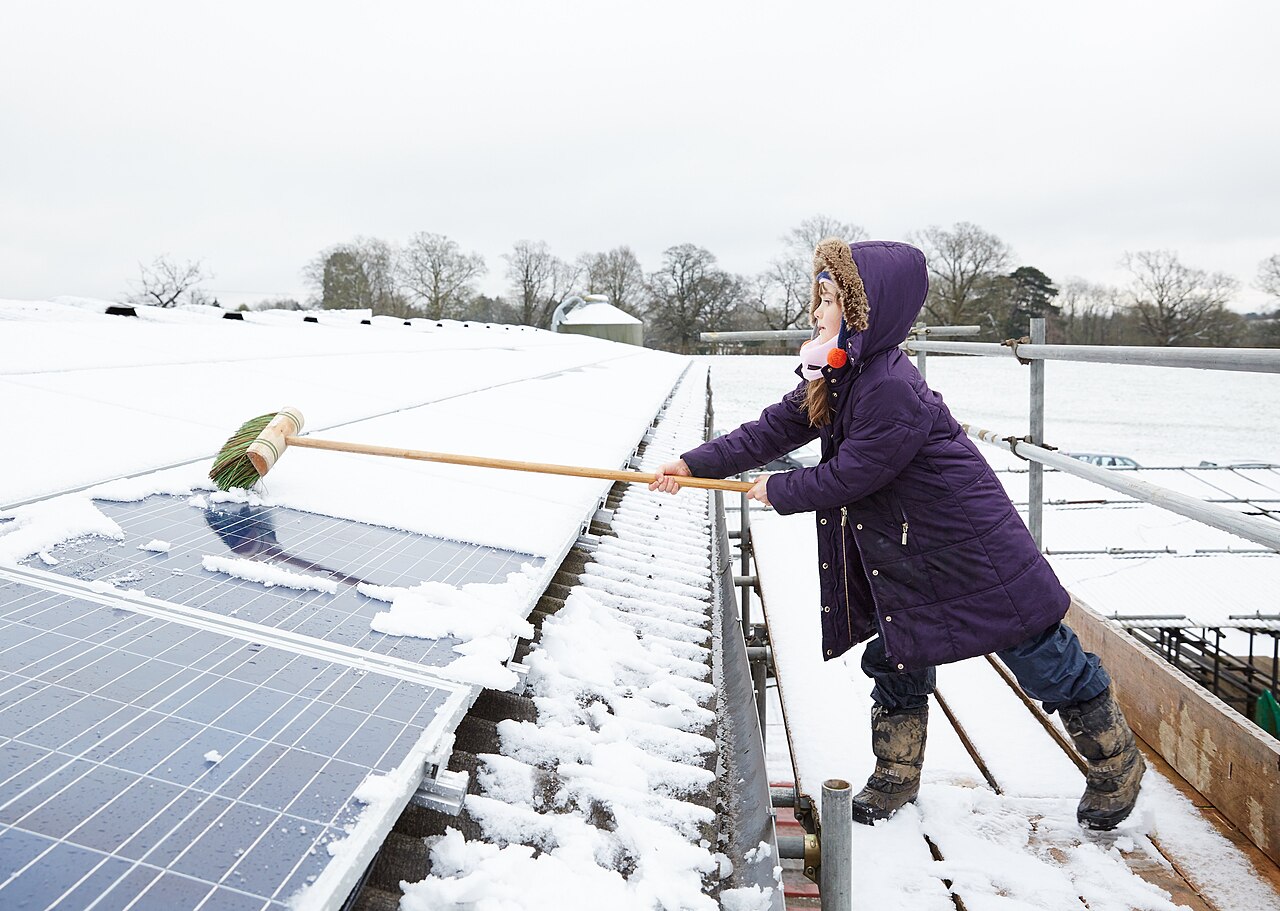
Snow tends to slide off dark, tilted panels by itself within a day or two of sunshine. Production lost to snow is concentrated in the shortest, darkest days, when the panels make little anyway. Leaves collecting along the bottom edge can be cleared with a soft roof rake from the ground. Pigeons nesting under panels are a common nuisance that also leaves droppings on the glass. Installers sell mesh guards that close the gap under the array.
The bigger output check
If production is well below the estimate in your installer's proposal or NREL's PVWatts tool, dirt is rarely the main reason. Check for new shade from growing trees, an inverter showing errors, a tripped breaker, or a failed panel or optimizer. Many problems show up as a sudden drop on a sunny day rather than a slow slide. For the financial side of solar, see whether solar is worth it and whether a battery pays.
Questions people ask
How often should solar panels be cleaned?
In many climates, never, or only when monitoring shows a clear drop that rain does not fix. In dry, dusty areas, once or twice a year, often at the end of the dry season, is common.
Can I use a pressure washer on solar panels?
No. High pressure can damage the seals, the anti-reflective coating and the frame, and many manufacturers say it voids the warranty. Use a soft brush and low-pressure water.
Should I clear snow off my solar panels?
Usually not. Panels are dark and tilted, so snow tends to slide off on its own once the sun hits them. Climbing on a snowy roof is dangerous, and scraping can scratch the glass. A roof rake from the ground is acceptable only for low, easily reached arrays and only with soft tools.
Sources
Numbers on this page are estimates built on the stated assumptions. Your rates, climate and home will change them, so plug in your own figures. Nothing here is financial or professional advice.